
For many Americans, the cost of healthcare can be paralyzing. Unknown costs, unexpected charges,...
November 6, 2026
When work requirements and six-month renewals change the financial journey for behavioral health and SUD patients
Executive Summary
Medicaid is a central payer for behavioral healthcare. Starting January 1, 2027 is the effective date for federal enforcement of Medicaid work reporting requirements. This will have a significant impact on your Medicaid census as the experts predict a massive decrease in Medicaid enrollments. This presents either a big risk to behavioral health providers or an opportunity. Here are the enrollment estimates:
-
CMS’s official rule estimates that enrollment will fall by 2.3 million during FY2027 because implementation begins partway through that fiscal year, then by 3.1.3.3 million in subsequent years. CMS estimates roughly 15% of the affected adult expansion population will be dis-enrolled.
-
CBO further estimates that 5.3 million of its 5.7 million coverage losses would result in people becoming uninsured, with relatively few obtaining other coverage.
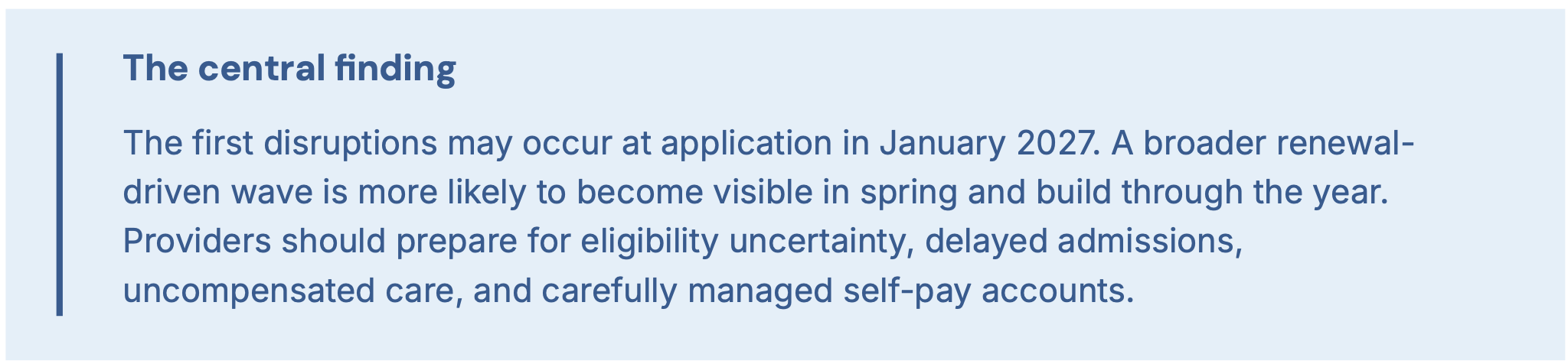
For providers, the immediate opportunity is to manage the patient transition: verify eligibility, support exclusion documentation, provide financial counseling and estimates, screen for assistance, and manage only a valid residual obligation.

What Changes and When
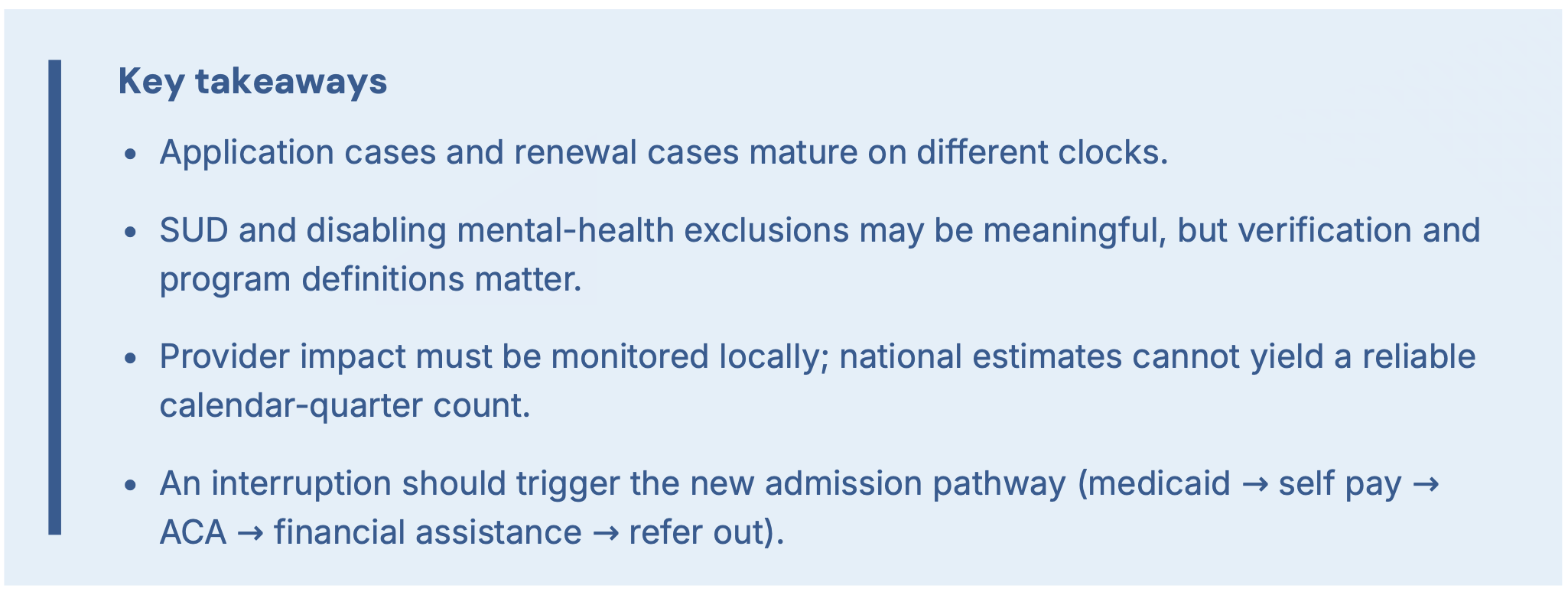
Two eligibility changes interact: community engagement requirements and six-month renewals for ACA expansion adults. New applications may be tested at application, while people already enrolled face verification at the first renewal initiated after a state implements the requirement.
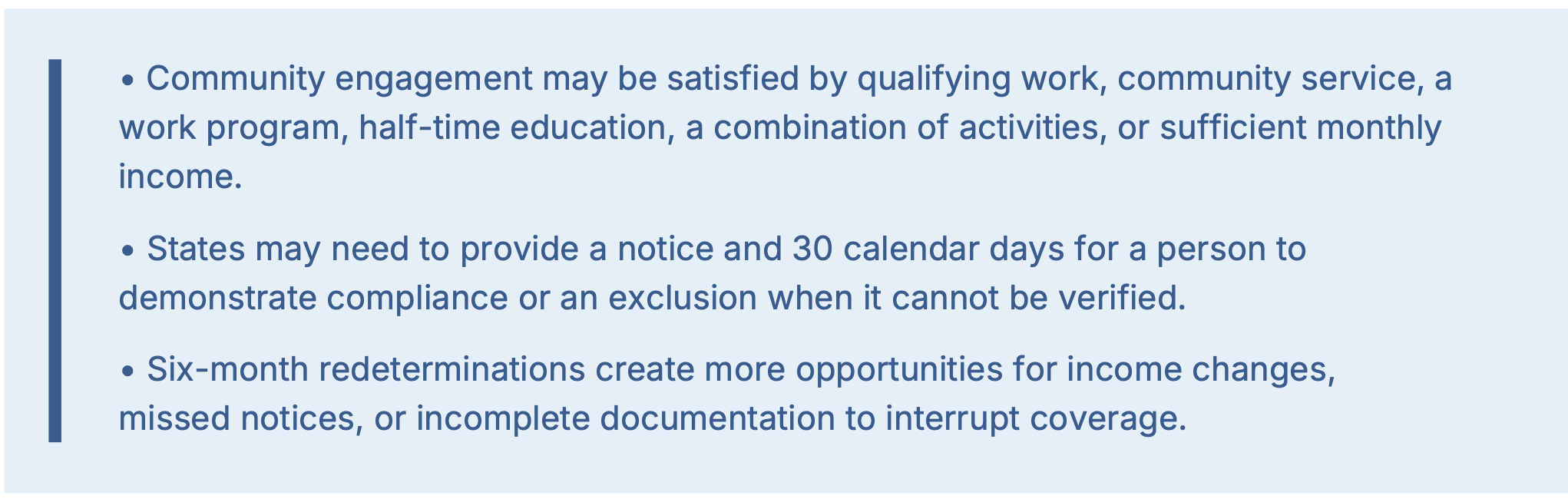
Planning implication: Monitor applications and renewal cohorts separately. March or April is a plausible national visibility point for renewal losses, not a guaranteed first termination date.

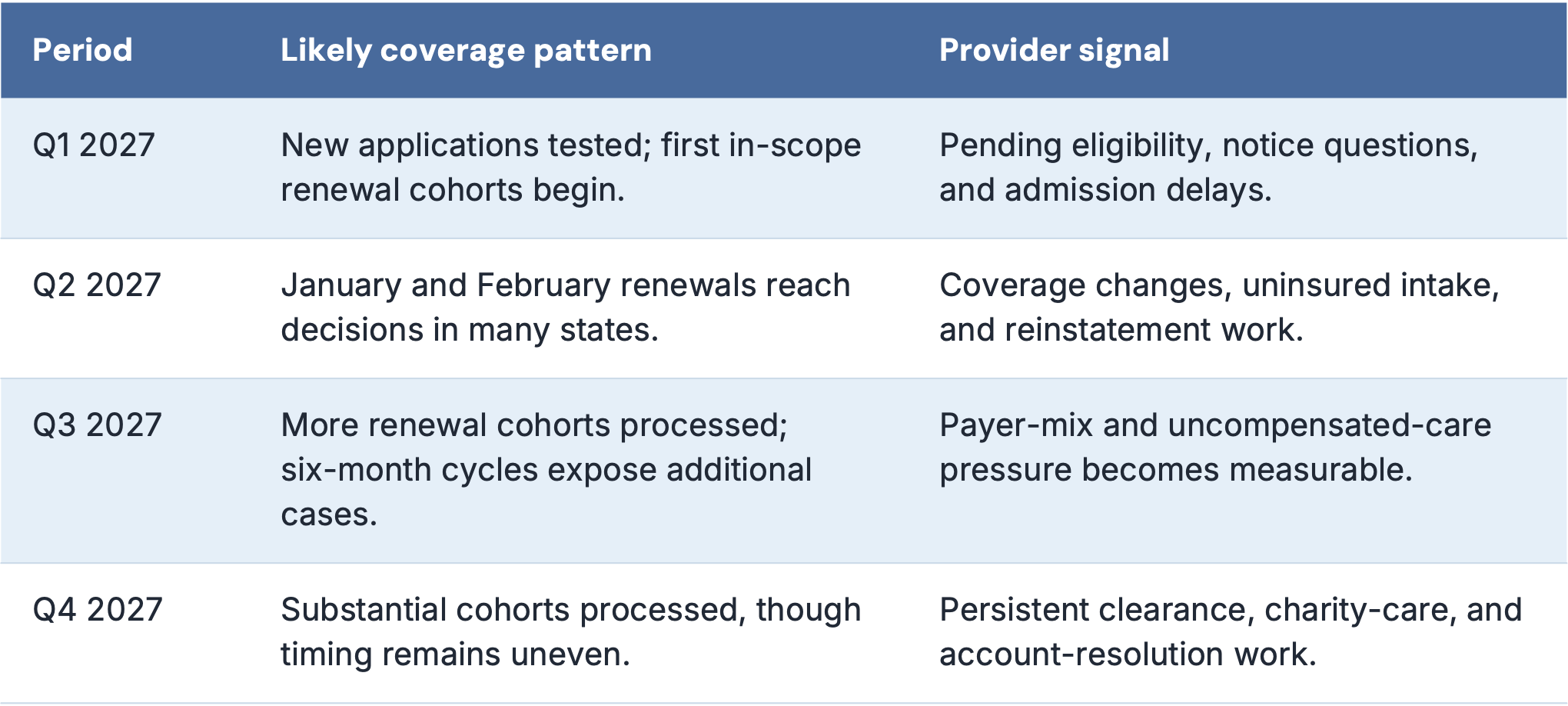
The 2027 Quarterly Outlook
The expected pattern is a phased disruption rather than a single coverage cliff. Timing differs across states, renewal calendars, outreach practices, data matching, exclusions, implementation dates, and any approved federal relief. In behavioral health and SUD treatment, these concerns are amplified:


Why Behavioral Health Is Exposed
Federal law includes exclusions for people who are medically frail or have special medical needs, including individuals with SUD or a disabling mental disorder. Separate exclusions can apply to participants in qualifying drug or alcohol treatment and rehabilitation programs. In practice, eligibility depends on the individual, the available documentation, and the state’s verification process.
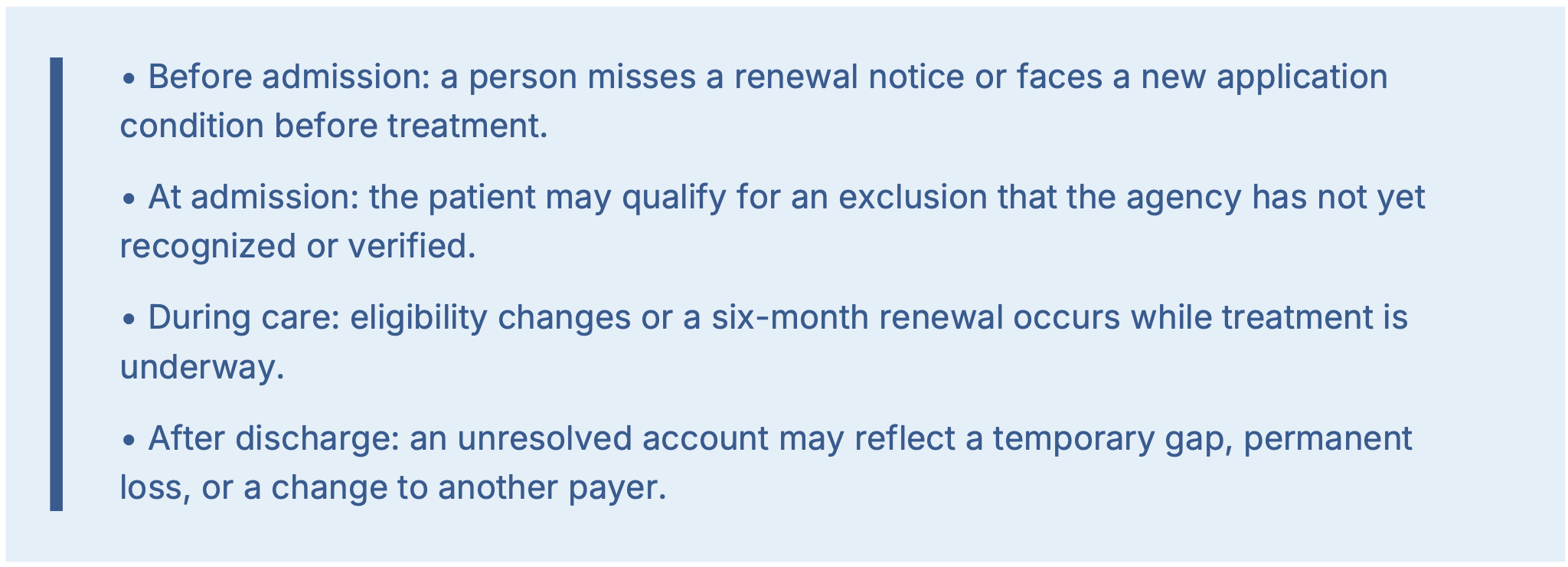

A Provider Financial Model
Translate coverage disruption into accounts, not promised revenue.
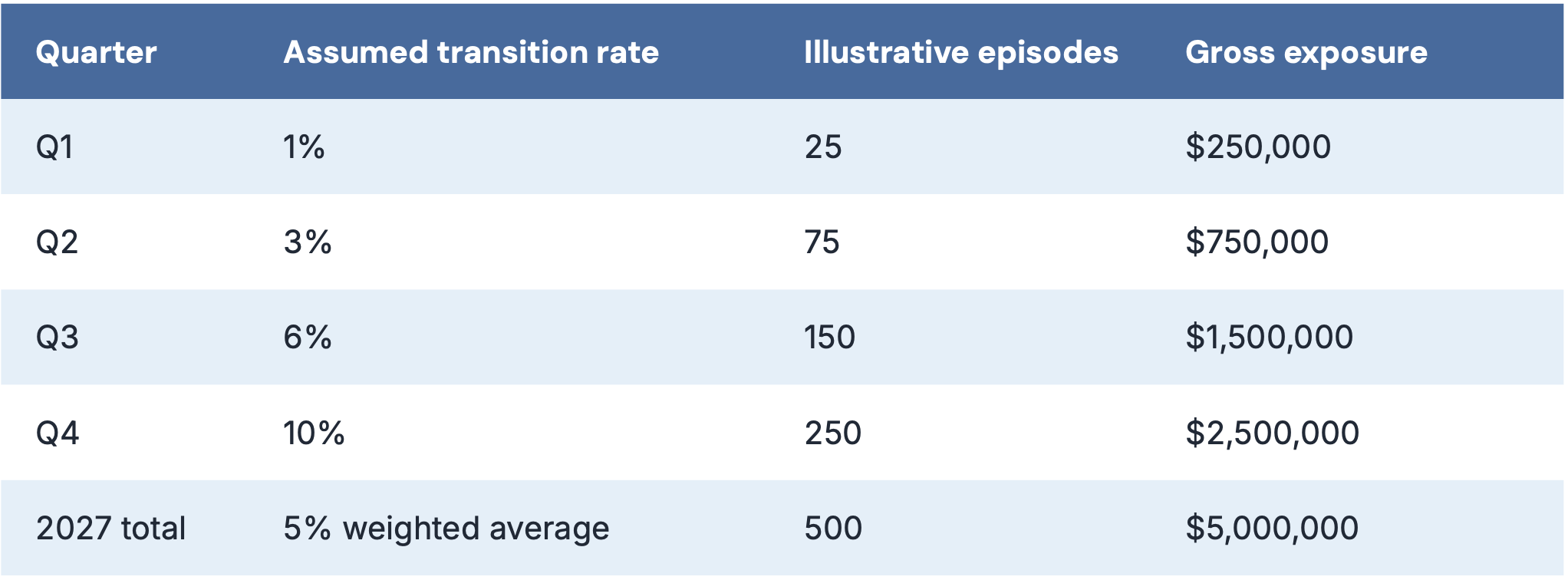
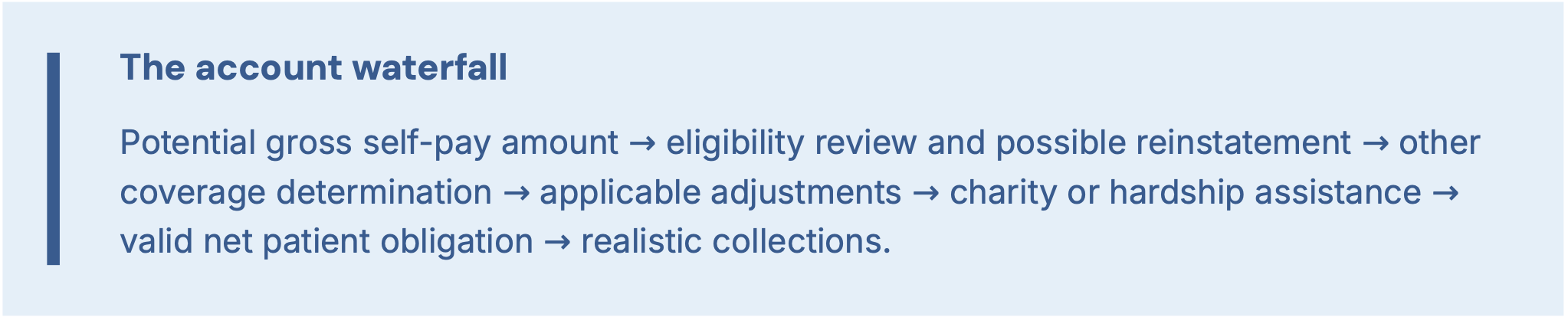
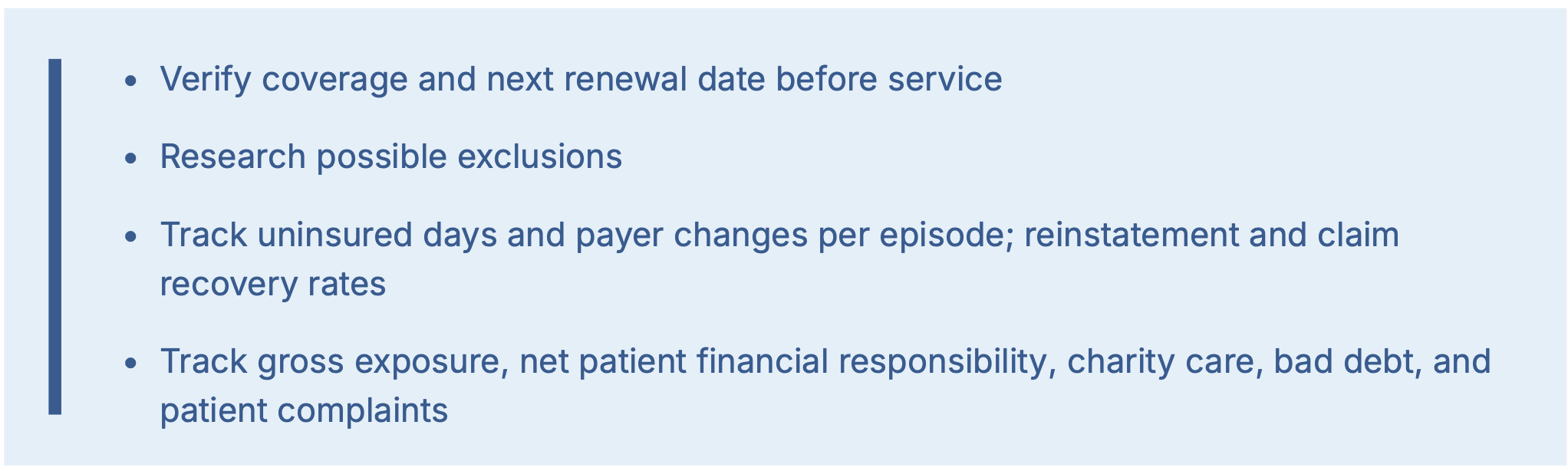
A $10,000 gross exposure should not be considered as $10,000 in new revenue or immediate patient debt. Providers should track coverage interruptions, uninsured days, gross exposure, and net collectible patient balance separately.
A Patient Financial Management Response
Be prepared. Use of electronic financial records (not electronic medical records) should allow for the tracking of coverage transitions: medicaid → self-pay → ACA Plans. Build the workflow around coverage transitions and changes to patient financial responsibility.
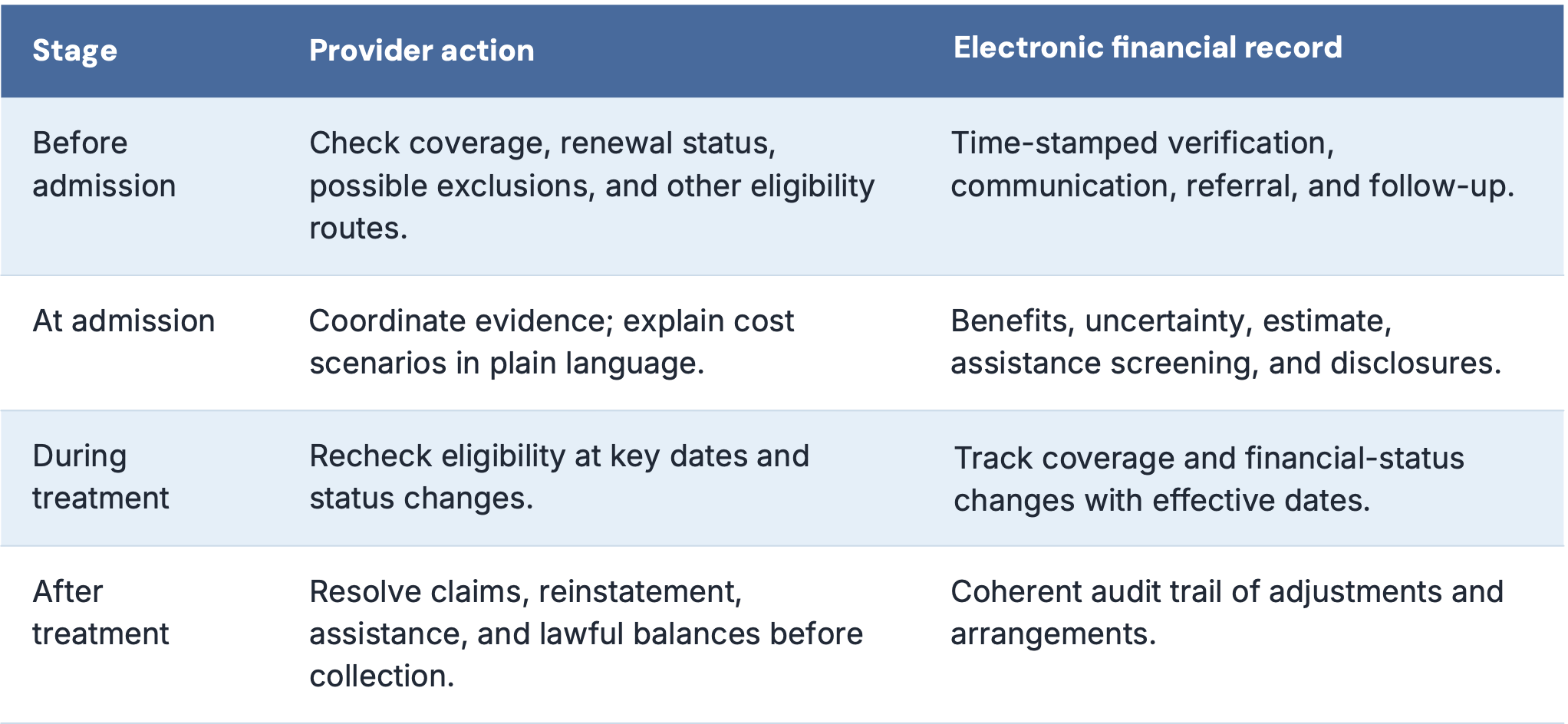
For uninsured patients or patients who elect not to use coverage, federal Good Faith Estimate requirements apply when care is scheduled sufficiently in advance or an estimate is requested. Rapidly scheduled behavioral-health care requires attention to the applicable triggers and state-law obligations regarding Good Faith Estimates.
Conclusion and Action Plan
Prepare before the first large renewal cohorts mature. In Q4 2026, map the medicaid population within 25-50 miles of your facility(s) to estimate exposure. Create situational conversations (script and workflows) for admissions staff to facilitate this unique admission pathway.
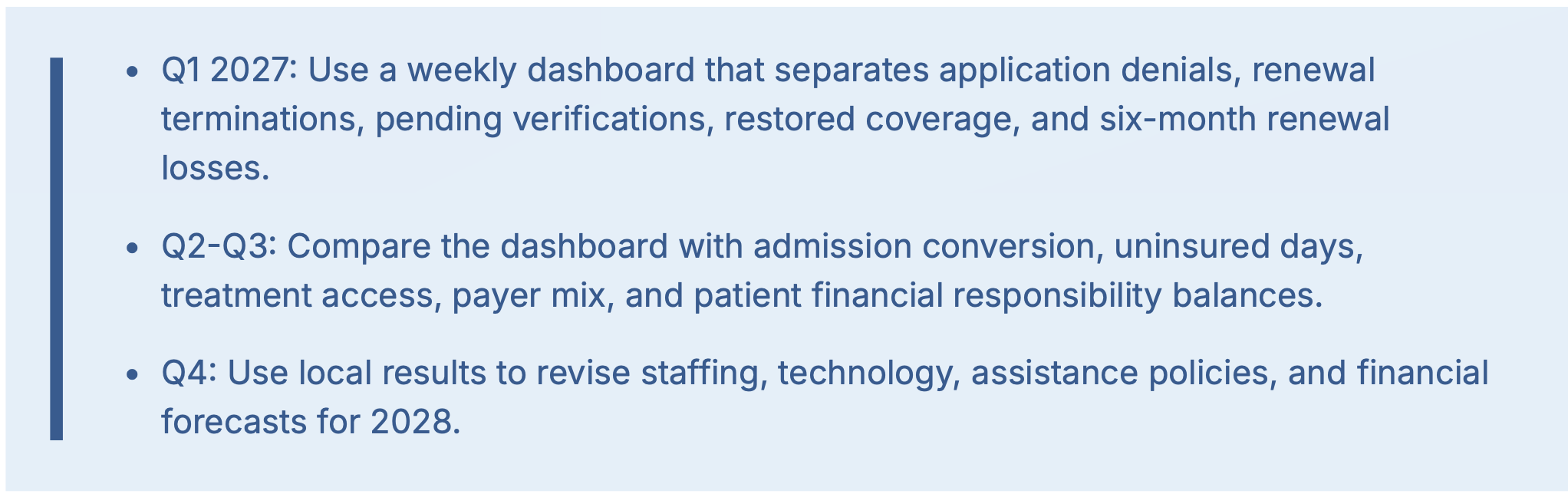
The priority is identifying a problem early, helping the patient navigate it, documenting the answer, and managing the patient financial responsibility that remains.
Sources and Methodology
Source notes:
[1] CMS, Medicaid Program; Community Engagement Requirement for Certain Individuals, interim final rule, 91
Fed. Reg. 33336 (June 3, 2026).
[2] CMS, Section 71107: Implementation of Eligibility Redeterminations, State Medicaid Director Letter (March
2026).
[3] KFF, Medicaid Mental Health and Substance Use: Expansion Trends and the Fiscal Pressure Ahead (May
13, 2026).
[4] Urban Institute, Projected Reductions in Medicaid Expansion Enrollment Under OBBBA’s Work
Requirements and Six-Month Redeterminations (March 25, 2026).
[5] CMS, What is a good faith estimate? Current consumer guidance.
[6] KFF, Tracking Implementation of the 2025 Reconciliation Law Medicaid Work Requirements (updated
September 2026).
Methodology
The quarterly pattern is FinPay's planning analysis based on federal implementation dates, application and renewal mechanics, required notice periods, and ordinary renewal processing time. The financial illustration applies stated assumptions to a hypothetical provider. It is not a forecast of national quarterly terminations, an individual-provider claim, or an estimate of collectible revenue.
This white paper provides operational planning analysis, not legal advice. Review state rules,
implementation dates, and patient circumstances with counsel and the applicable Medicaid agency.